
AI vs. Ghostwriters: Cost, Speed, and Quality Benchmarks
Compare AI writing agents to ghostwriters across cost per post, turnaround time, and publish-ready quality. Real numbers for founders publishing 2 posts weekly.

Contents
Many comparisons of AI writing tools versus human ghostwriters are written by AI tool vendors or content agencies. Neither party has much incentive to give you a straight answer.
This post runs the numbers as if you were a solo founder publishing two posts per week. Real cost assumptions. Real turnaround expectations. A five-dimension scorecard with honest tradeoffs in both directions. If ghostwriters win on a dimension, you'll read it here.
What "publishable" actually means
Before any benchmark makes sense, you need a definition of done.
A publishable post has accurate facts, inline citations with working URLs, a voice that matches the author's brand, a proper heading structure, a meta description, and at least a basic internal link. Not just a draft. Not just "readable."
Almost every AI-vs-human comparison you'll find online benchmarks draft quality instead. AgencyAnalytics, Jasper, and Copy.ai each discuss AI-vs-human content writing from their own perspective. None define a publish-ready threshold.
That gap matters. A draft that needs 90 minutes of fact-checking, reformatting, and SEO work before it can go live isn't the same as a post you can review and ship. The rest of this post measures against the publish-ready bar, not the draft bar.
Cost per publishable post: the real math

Here's how the numbers stack up across the three main options.
Freelance ghostwriter: Mid-tier freelance rates for a 1,000-1,500 word post are often estimated at $150-$500. Add a revision round or two, and the effective cost per published post often lands closer to $300-$600. That's before you count the time you spend writing the brief, reviewing the draft, and managing the back-and-forth.
Content agency: Agencies bundle that labor and charge for it. A typical retainer for 4-8 posts per month is often estimated at $1,500-$4,000, which works out to $200-$500 per post, plus a 1-2 week lead time per piece. You're paying for project management and editorial oversight. Whether that's worth it depends on how much you value that layer.
AI agent: Subscription and API costs for a well-configured agent are often estimated at $50-$150 per month for high-volume use. At two posts per week (roughly eight posts per month), that's $6-$18 per post in tool cost. Add 20-30 minutes of founder review time per post.
The cost table looks like this:
| Method | Cost per post | Founder time per post |
|---|---|---|
| Freelance ghostwriter | $300-$600 | 45-90 min (briefing + review) |
| Content agency | $200-$500 | 30-60 min (review + approvals) |
| AI one-shot prompt | $2-$5 | 60-90 min (editing, fact-checking) |
| AI agent with pipeline | $6-$18 | 20-30 min (review only) |
The hidden cost most comparisons skip is editorial overhead. Briefing a ghostwriter, responding to questions, reviewing a draft that misses the voice, requesting revisions. For a founder doing this themselves, that's 45-90 minutes per post before you've approved a word. That time has a real value, even if it doesn't show up on an invoice.
Turnaround time and revision cycles
Ghostwriter baseline: a briefed freelancer may deliver a first draft in 3-7 business days. Add one or two revision rounds and you're looking at 5-14 days per post before it's ready to publish.
AI agent baseline: a research-to-draft pipeline can run in a few minutes for a well-configured agent. Review and publishing prep adds 20-30 minutes of human time. Total time from topic to publish-ready: under one hour.
The revision cycle asymmetry matters more than the speed gap. With a ghostwriter, you write feedback, wait, review again, and often repeat at least once before the voice sounds right. With an AI agent that learns your brand voice upfront, that calibration happens before the first post ships. Revision cycles shrink after setup, not after months of working together.
At two posts per week, the compounding effect is real. A 10-day ghostwriter cycle means you're always managing two or three posts in various stages simultaneously. An AI pipeline means you can turn around a post the same day a news hook appears. That flexibility doesn't show up in a cost comparison, but it changes how you operate.
A consistent observation across ContentHacker and Scalenut research is that the best results come from AI drafts combined with human editing. That's the hybrid model, and the turnaround math above is what makes it work in practice.
Factual reliability and citation quality
This is where tool marketing gets slippery.
One-shot prompt tools (paste a topic, get a draft) have no retrieval layer. They generate text from training data. Citations in that output may look real and still link to pages that don't exist or don't say what the post claims. This is the hallucination problem, and it's not theoretical.
Ghostwriters aren't automatically safer. A ghostwriter who isn't a subject-matter expert in your niche will often cite other blog posts rather than primary research. The output looks sourced, but the chain of evidence runs through aggregators rather than original studies, company reports, or primary data. That's a different flavor of the same problem.
What changes with a research-first pipeline is structural. An AI agent that runs live web research before drafting can pull primary sources, check whether URLs resolve, and flag claims it can't verify from retrieved content. The draft is built on retrieval, not generation from memory.
If your name is on the post, a fabricated citation isn't just a quality problem. It's a credibility problem. One bad reference that a reader spots poisons the whole piece. The bar for factual accuracy is higher than most AI-vs-human comparisons acknowledge, precisely because most of those comparisons are written by tool vendors who don't want to name the hallucination risk directly.
SEO readiness out of the box
Most ghostwriters don't deliver SEO-ready output by default.
A publish-ready post needs a target keyword, proper H1/H2 structure, a meta description, a URL slug, and a word count calibrated to what's already ranking for that query. Unless you hire a ghostwriter who is also an SEO specialist (uncommon, expensive), you're handling keyword research, the SEO brief, and on-page optimization yourself. That's an additional 30-60 minutes of work per post, plus the cost of a separate SEO tool.
An AI agent pipeline that includes SERP analysis and SEO frontmatter generation delivers title tag, meta description, slug, and heading structure as part of the output. No second tool. No separate pass.
Worth naming the caveat: on-page optimization is one input into rankings. Topical authority, backlinks, and domain age still matter. An AI agent can give you technically correct on-page signals, but that's not the same as a guarantee of traffic. MarketerMilk and Scalenut both focus heavily on SEO as a differentiator for AI tools, but neither benchmarks the actual on-page deliverables per post. Getting the frontmatter right is table stakes for ranking, not a finish line.
The five-dimension scorecard
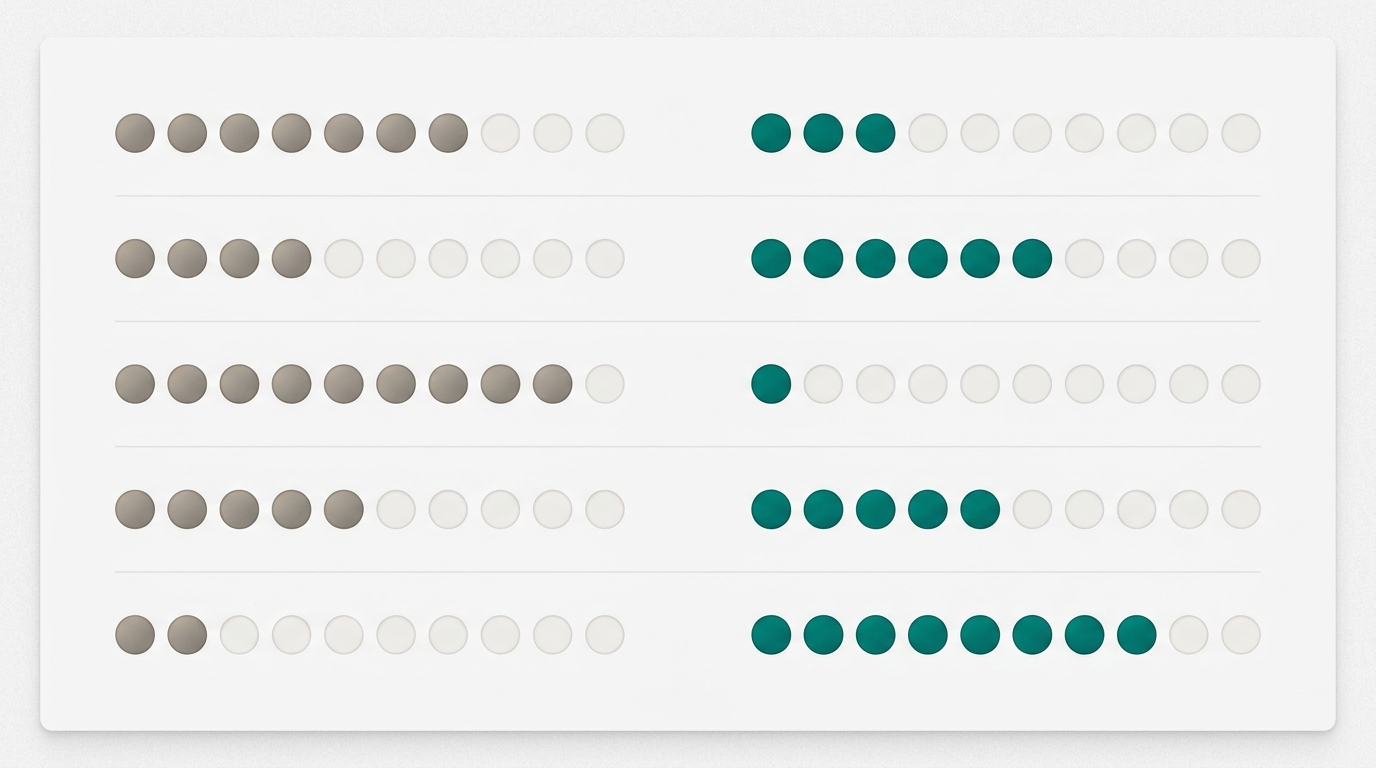
Here's the honest comparison across the five dimensions that determine publish-ready output:
| Dimension | Ghostwriter | AI Agent |
|---|---|---|
| Cost per post | 2/5 ($300-$600+) | 5/5 ($6-$18 in tool cost) |
| Time to publish | 2/5 (5-14 days) | 5/5 (under 1 hour) |
| Revision cycles | 3/5 (1-3 rounds typical) | 4/5 (shrinks after brand voice setup) |
| Factual reliability | 3/5 (depends on subject expertise) | 3/5 (requires retrieval layer, not one-shot) |
| SEO readiness out of box | 2/5 (requires separate brief) | 4/5 (frontmatter included in pipeline) |
Ghostwriters win on two things the scorecard above doesn't fully capture: voice nuance and original research. A skilled ghostwriter who has worked with you for months can produce prose that reads like you wrote it, because they've absorbed your rhythm. A ghostwriter with subject-matter expertise can conduct original interviews, synthesize proprietary data, and write from genuine authority in a field.
AI agents win on speed, cost, and consistency. Every post goes through the same process. Factual checking doesn't get skipped because someone is tired on a Friday.
The practical model for founders publishing 1-4 posts per week under their own byline: AI agent for research, structure, and first draft; founder review for voice calibration and judgment calls. That's not a compromise. That's the workflow that actually ships posts at volume without burning your calendar or your budget.
Where you should still hire a ghostwriter:
- Long-form thought leadership (3,000+ words) where the argument is original and complex
- Interview-based content where the ghostwriter conducts the conversation and synthesizes it
- Posts where your personal story or lived experience is the core of the piece
Those are real cases where AI is the wrong tool. Know them, and you'll use both options better.
FAQ
How do AI agents handle brand voice if they've never seen my writing before?
Most agents that include a brand voice learning step will ask you to provide sample posts or fill in a brand context field during setup. The writer model uses that input as a style anchor for every draft. The calibration improves after the first few posts once you've flagged what's off and why. It's front-loaded work rather than ongoing revision cycles.
Is a ghostwriter worth it if I only publish twice a month?
At two posts per month, the volume math changes. You're spending $600-$1,200 per month on ghostwriting versus $50-$150 for a tool, but you're also buying back significant time and getting prose with genuine voice depth if the writer is good. At low volume, the cost delta per post matters less than whether you actually ship. If a ghostwriter removes the activation energy for you, that's worth something.
What happens when an AI agent can't find a source for a claim?
A well-configured research-first pipeline should flag unverifiable claims rather than invent citations. In practice, this means some claims come back without a source attached. That's the correct behavior. Your job in review is to decide whether to cut the claim, qualify it without a citation, or find the source yourself. A missing citation is a flag, not a failure.
Do AI-generated posts get penalized by Google?
Google's stated position is that it evaluates content quality, not production method. Posts that are thin, repetitive, or factually wrong will underperform regardless of who or what wrote them. Posts with clear structure, accurate citations, and genuine usefulness tend to rank. The best signal is whether a human reader would find the post worth reading.
How long does the founder review step actually take?
For a 1,200-word post with inline citations, a focused review pass takes 15-25 minutes if the draft is well-structured. That includes reading for voice, checking two or three citations, and adjusting a paragraph that doesn't land right. If you're reading every source from scratch or rewriting large sections, the pipeline isn't doing its job and you should diagnose whether the brief was clear enough.
Sources
- AgencyAnalytics: AI vs. Human Content Writing
- ContentHacker: AI vs. Human Content Writers
- Scalenut: AI vs. Human Content Writing
- Copy.ai: AI vs. Human Writers
- Jasper: AI vs. Human Content Writing
- MarketerMilk: AI vs. Human Content Writing

Run one post through an AI agent pipeline this week. Time it from topic to publish-ready draft. Compare that number against your last ghostwriter engagement. The benchmark only becomes real when it's your post, your topic, your voice. The output includes inline citations and SEO frontmatter. You review it. You publish it. Your name stays on it.
Ryterr Team
Written with Ryterr: researched on the live web, written in our voice and fact-checked before publishing.