

Content Cadence Math: Posts Per Month by Growth Stage
Calculate your sustainable blog publishing cadence with the actual formula. Real numbers for validation, traction, scaling, and mature stages.
Contents
Content Cadence Math: How Many Posts to Publish at Each Growth Stage
Most content advice tells you to "publish consistently." Almost none of it tells you what that means when you have 6 hours a week, a product to build, and no writing team. The advice isn't wrong. It's just incomplete in a way that makes it useless.
This post gives you the actual math. Four growth stages, real numbers at each one, and a formula you can run in 10 minutes to find your sustainable weekly cadence. Not the aspirational number. The real one.
Why "Publish Consistently" Is Not a Strategy
The constraint that matters most isn't your ambition. It's your hours per week. And "publish consistently" ignores that entirely.
Here's the formula that actually runs your content operation:
Weekly posts = available hours / hours per post with current tooling
Every variable in that formula changes as you grow. Your available hours change. Your tooling changes. Your hours-per-post number changes. Generic advice about consistency doesn't account for any of that.
The research backs this up. Digital Applied puts it plainly: "A sustainable 2 posts per week outperforms an unsustainable 5. Optimize for 12-month consistency."
That's the whole game. Not launch-month output. Twelve-month consistency.
The compounding problem with inconsistency is real. SEO momentum isn't a light switch. It builds slowly through consistent signals and resets when those signals go quiet. Two posts per week for 52 weeks compounds. Five posts for six weeks then nothing doesn't.
The Four Growth Stages and What Changes at Each One
Before the math, you need a shared definition of each stage. Not feelings. Concrete markers.
Validation: 0-500 monthly organic visitors. No PMF signal yet. You're the only writer. Your primary goal at this stage is keyword discovery. You're finding out which topics your audience actually searches, not which ones you assume they search.
Traction: 500-5,000 monthly organic visitors. One to three keyword clusters are showing ranking movement. Your primary goal shifts from discovery to cluster dominance. You're not casting wide anymore. You're building depth around what's already working.
Scaling: 5,000-25,000 monthly organic visitors. Content is now a measurable acquisition channel, not a side bet. Your primary goal is compounding. You're running pillar-and-cluster architecture at volume, and you're starting to allocate capacity to refresh, not just new production.
Mature: 25,000+ monthly organic visitors. Content tooling or a small team exists. New posts target competitive head terms. The refresh queue is as important as new production because defending rank matters as much as winning it.
The structural shift between Validation and Traction is where most founders stall. Digital Applied describes the model: "Ship the pillar, then schedule 8-15 supporting posts around it in 60-90 days." That's not a creative preference. It's architecture. Isolated articles are less likely to rank well in competitive topics. Clusters do.
One other number to build into your mental model early: content decay has accelerated. Refresh cycles tightened from 18 months to 6-8 months due to AI-generated SERP volatility (Digital Applied). That means the Mature stage math isn't just about new posts. A growing chunk of your capacity goes to keeping existing posts alive.

The Cadence Math, Stage by Stage
Run the formula at each stage and the right number becomes obvious.
Validation stage. You have 4-6 hours a week for content. A research-first post without AI assistance takes 4-6 hours by itself. The math gives you 1 post per week, maybe 1 every 10 days. Over 12 months, that's 40-52 posts. Target long-tail keywords with low competition. That archive, if quality holds, is enough to move from 0 to several hundred monthly organic visitors.
Traction stage. You're allocating 8-10 hours a week to content. You've validated a few clusters. Now you're building pillar plus cluster structure. The target is 2 posts per week: roughly 1 pillar post per month plus 3-4 cluster posts around it. The structural goal from Digital Applied, 8-15 supporting posts per pillar in 60-90 days, means you're planning 60-90 days ahead, not week to week.
Scaling stage. You're putting 15-20 hours a week into content, or you have tooling that reduces your effective hours-per-post. Target 3-4 posts per week. Reserve 15-25% of your weekly capacity for refreshing existing posts (Digital Applied). At this stage, ignoring the refresh queue costs you real rankings.
Mature stage. Cadence stabilizes at 3-5 posts per week of new content, plus a formal refresh queue running in parallel. New posts go after competitive head terms. The refresh queue targets posts showing ranking decay, which by now is a predictable pattern in your analytics.
Two Scenarios, Same Week
The formula changes completely based on your tooling. Here's what the same week looks like with two different setups.
Scenario A: 5 hours a week with an AI writing agent.
An AI agent handles web research, citation sourcing, and a first draft. That saves roughly 3 hours per post. Your time per post drops to 60-90 minutes for the brief, review, edit, and fact-check sign-off.
At Validation stage, that math could produce 3-4 posts per week. At Traction stage, 4-5 posts per week. This is an illustrative example based on the workflow assumptions here: you're operating at a stage the formula says requires 15-20 hours, but you're doing it in 5.
The quality constraint matters here. The AI agent must produce real citations with real URLs. Fabricated sources fail fact-check review and destroy the trust the post is supposed to build. The founder still reviews the quality score before publishing. The agent does the research work. The founder does the judgment call.
Scenario B: 20 hours a week, no AI.
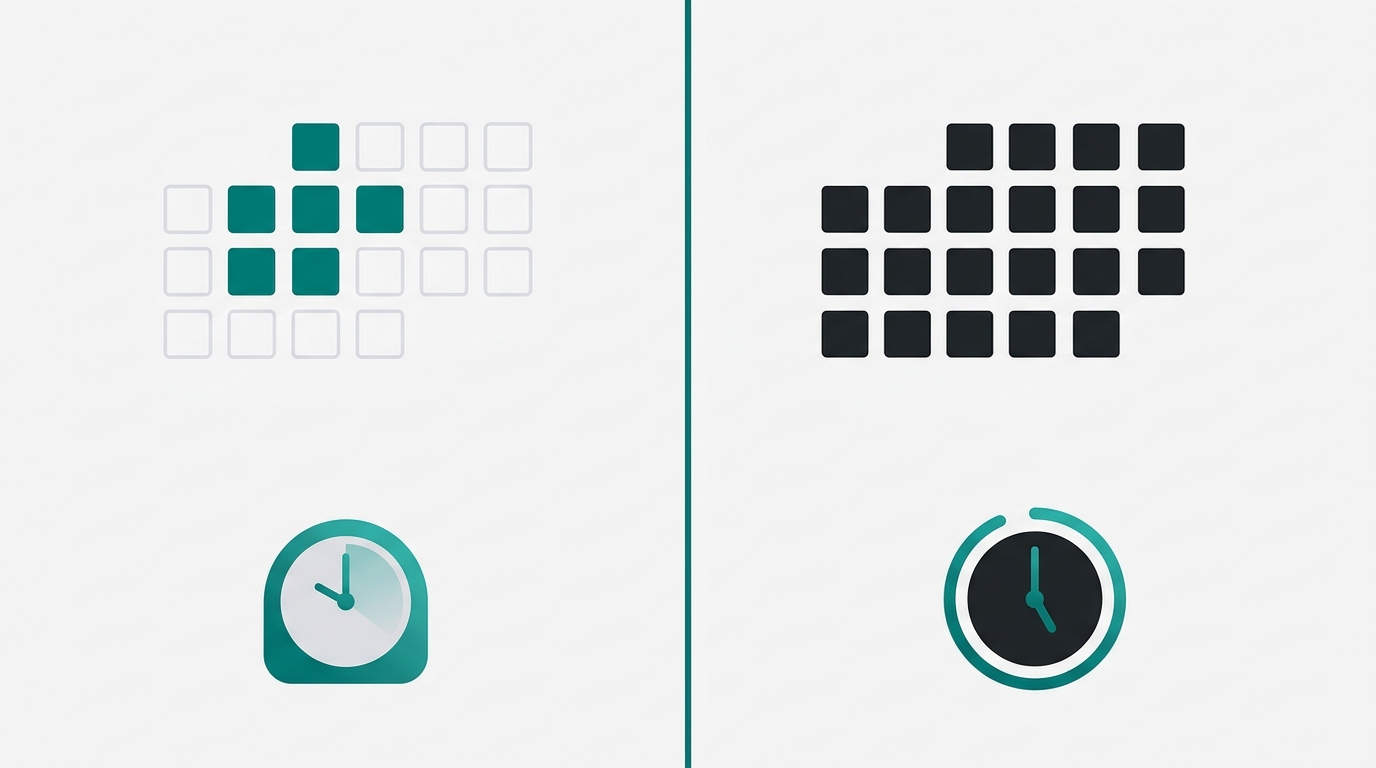
Research, drafting, editing, and fact-checking are all manual. A research-first, fully cited post takes 4-6 hours. With 20 hours available, you get 3-4 posts per week, but you've spent nearly all your content hours to get there. No capacity for refresh. No capacity for anything else.
The key insight: Scenario A at 5 hours produces the same or higher output as Scenario B at 20 hours. The 15 freed hours go back to the product. That's not a small difference. It's what determines whether content is a growth channel or a time sink.
The ceiling warning still applies. Digital Applied is direct: "Fewer, deeper posts. 2 great long-form posts per week beats 5 thin ones. Depth is the new moat." AI assistance only moves the math if the output still meets research depth requirements. Volume without citations and sourcing doesn't compound.
What Cadence Actually Produces Over 12 Months
The compounding math is where the stage-by-stage numbers get real.
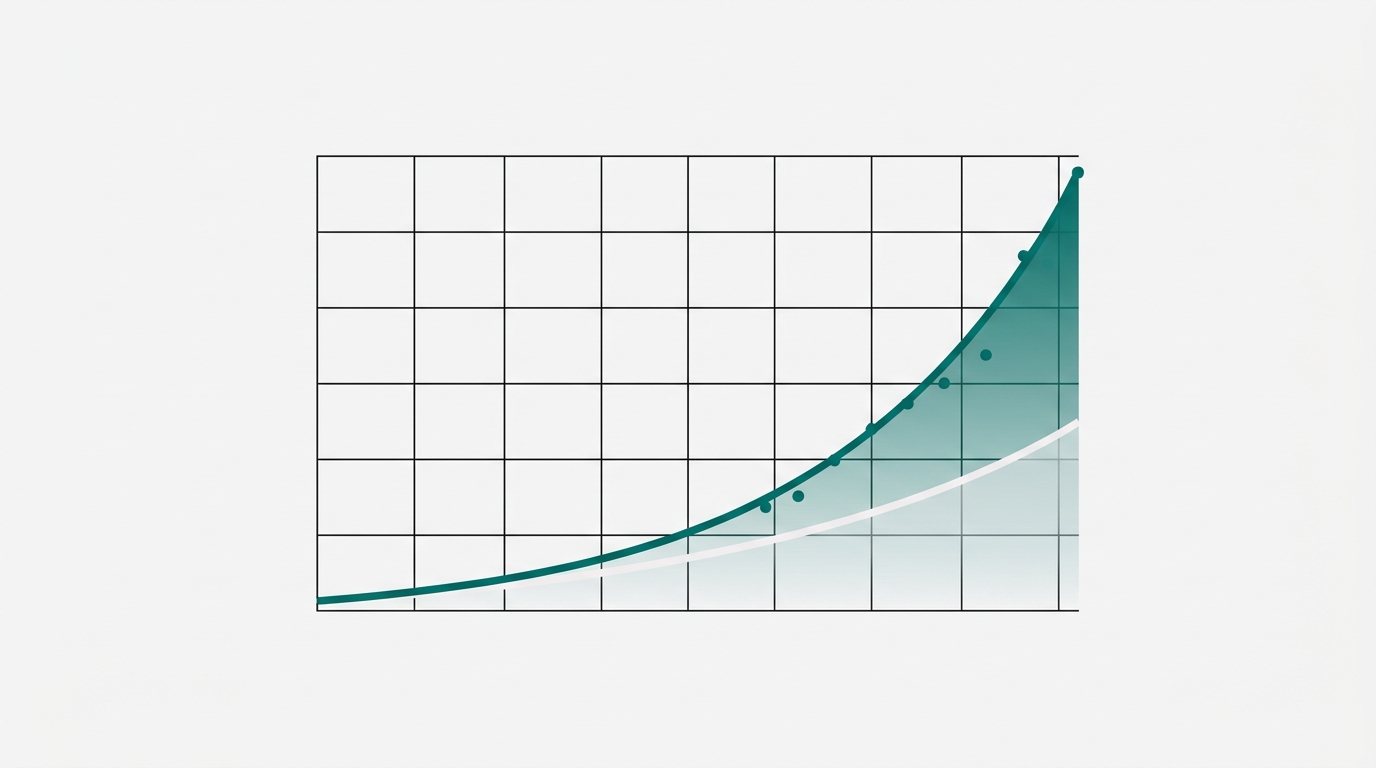
1 post per week is 52 posts per year. 3 posts per week is 156 posts per year. The coverage difference isn't linear. A 50-post archive targeting 1 primary keyword each covers 50 search intents. A 150-post archive with cluster structure covers 50 primary intents plus 100 supporting intents built around them. That's where traffic compounds, not from the raw post count but from the cluster architecture underneath it.
The decay math adds another layer. Refresh cycles now run 6-8 months (Digital Applied). A 52-post archive at month 8 is already cycling into decay territory on the earliest posts. If you're not refreshing, you're not maintaining. The published count grows while the effective ranking count stays flat or drops.
This is why Digital Applied's metric framing is useful: "Rankings and traffic are lagging. Track briefs shipped, internal links added, and average time-to-publish to catch drift early." Those leading indicators tell you whether the compounding is actually working before your traffic graph shows a dip.
The volume ceiling is worth respecting. Publishing 5+ posts per week without quality controls can create a short-term bump, but it may also lead to a longer-term drop if quality slips. Thin content that ranks briefly then falls is worse than no content, because it trains Google's quality signals against your domain.
How to Set Your Number Right Now
Three steps. Ten minutes.
Step 1: Count your actual available hours for content this week. Not next month when things calm down. This week. Write the number down.
Step 2: Time one post end-to-end with your current tooling. Research, draft, edit, fact-check, format. All of it. That is your real hours-per-post number. Use it, not an estimate.
Step 3: Divide. That number is your sustainable weekly cadence. Don't exceed it by more than 20% or consistency breaks.
Now match the result against the stage definitions above. If your math gives you 1 post per week but you're in Traction stage, you have two options: reduce your hours-per-post (tooling) or accept slower compounding. There's no third option that skips the math.
Refresh allocation applies once your archive hits 20+ posts. Reserve 15-25% of your weekly capacity for updating existing posts (Digital Applied). A refreshed post that already has inbound links and domain authority can often be a strong SEO move when compared with publishing a new post targeting the same keyword. That's not a consolation prize. It's a compounding asset you've already paid to build.
The quality floor doesn't move regardless of stage. Every post needs a real research trail: sources, citations, fact-checked claims. The number of posts per week is flexible. That floor isn't.
FAQ
What if my cadence math gives me less than 1 post per week?
That's a real answer, not a failure. If you have 3 hours a week and a post takes 4 hours, your sustainable cadence is 1 post every 10-12 days. That's roughly 35 posts per year. Still enough to build a meaningful long-tail archive at Validation stage. The mistake is committing to 1 post per week and missing half the weeks. Publish every 10 days and hit every one.
Does the cluster model apply at Validation stage or only at Traction?
You can apply cluster thinking at Validation, but your execution will look different. At Validation, you're still discovering which clusters actually get search volume for your audience. Write 2-3 posts in a direction, check ranking movement after 60-90 days, and double down on what moves. The formal pillar-first architecture from Digital Applied, shipping the pillar then scheduling 8-15 supporting posts in 60-90 days, becomes practical once you have enough signal to know which pillars are worth building.
How much does AI assistance actually reduce hours-per-post?
It depends on what you're using it for. If an AI agent handles web research, citation sourcing, and a first draft, you're realistically looking at 60-90 minutes of founder time per post instead of 4-6 hours. That's a 3-4x reduction in time-per-post. The catch is that the quality of the output depends on whether the agent produces real citations and holds up to fact-check review. Time savings from an agent that produces fabricated sources aren't real savings. You spend the time you saved on cleanup.
When should I start allocating capacity to refreshes instead of only new posts?
The research from Digital Applied puts the allocation at 15-25% of weekly capacity once refresh becomes necessary. The trigger is archive size and age, not a specific traffic number. Once your archive hits 20+ posts and the earliest ones are 6-8 months old, some of them are entering decay territory. A practical rule: at 20+ posts, block 1 refresh slot per week and grow that allocation as the archive grows.
What happens if I publish at a higher cadence than the math supports?
The consistency breaks first. Missing weeks resets SEO momentum more than a lower consistent cadence would. The quality drops second. Research-thin posts rank briefly and then fall, which creates a negative signal pattern on your domain. Digital Applied is direct on this: 2 great long-form posts beat 5 thin ones. Exceeding your sustainable cadence by more than 20% is a short-term move with a medium-term cost.
Sources
- Digital Applied: Content Calendar Template 2026 Strategy Planning
- Orphiq: How Often to Post on Social Media
Run the formula this week with your actual hours. Pick the number the math gives you, not the number that sounds impressive. If AI tooling is the variable that changes your stage, Ryterr runs the research, draft, citations, and quality audit in one pipeline. You review and ship. The math takes care of the rest.
Ryterr Team
Written with Ryterr: researched on the live web, written in our voice and fact-checked before publishing.