

Is Your Pricing Page Version Costing You Customers?
Old pricing page versions are being cited by AI assistants, quoted to prospects, and destroying trust with your highest-value buyers. Here's how to fix the structural versioning problem most SaaS teams ignore.

Contents
A founder posts in a startup Slack: "Why is Perplexity quoting our 2023 pricing to prospects?" The answer is simple and painful. An old version of the pricing page still ranks. The AI assistant found it, cited it, and told a qualified buyer the wrong number. That buyer saw $49/month in the AI summary, clicked through to $79/month, and left.
This isn't a one-off glitch. It's a structural problem with how SaaS teams think about pricing pages. They treat them as static marketing assets, updated occasionally and then forgotten. They're not.
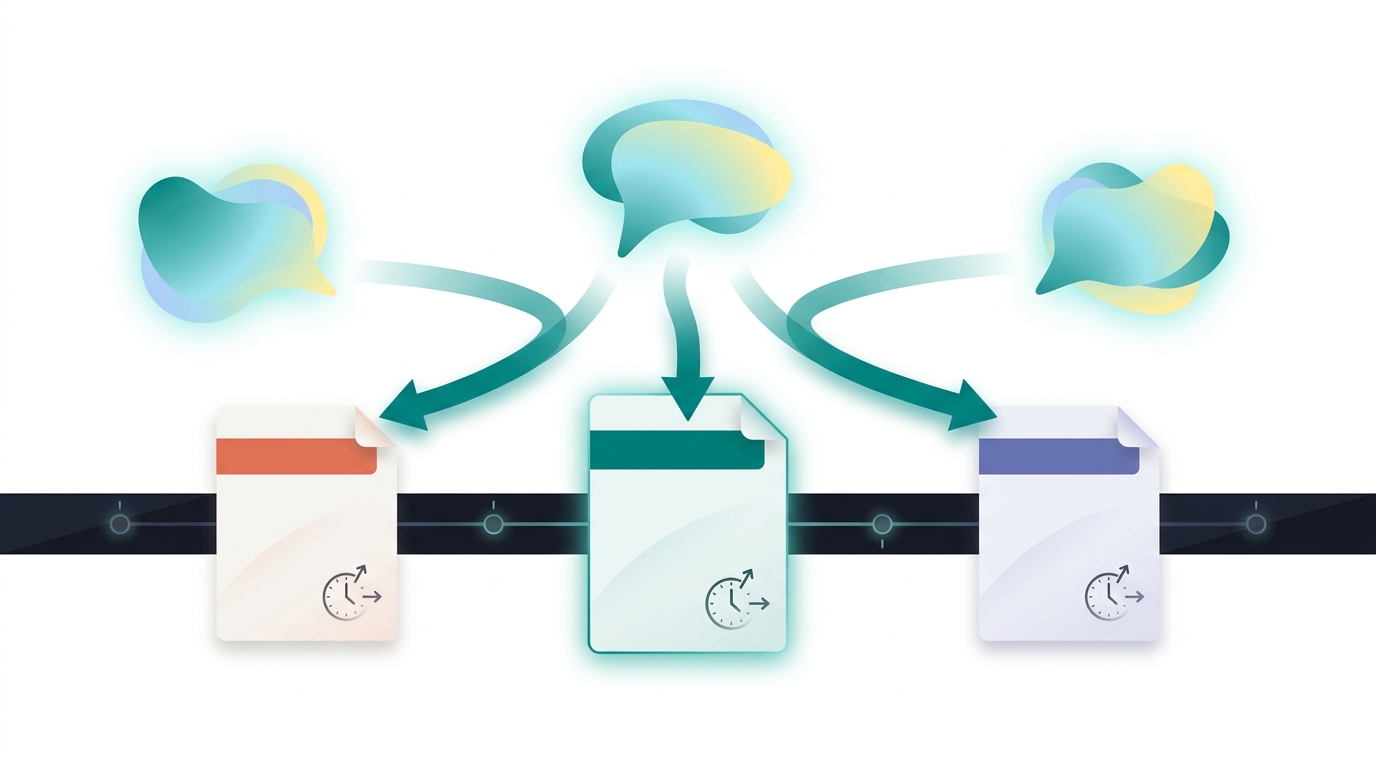
They're versioned documents that live simultaneously across search indexes, AI training data, browser caches, G2 listings, and competitor comparison posts. Every version you've ever shipped is still out there somewhere, answering questions you stopped asking two price changes ago.
Why Pricing Pages Rot Faster Than You Think
Most SaaS companies change pricing two to three times per year. The problem is that each old version doesn't disappear when you ship the new one. It lingers.
Search engines cache. AI assistants train on crawl data that can be months old. Your own blog post from 2022, the one explaining the old tier structure, still ranks for your brand plus "pricing." A prospect doing research gets three different numbers from three different sources and doesn't know which one is real.
Kompassify's SaaS pricing page analysis identifies this directly: AI assistants misreport pricing when facts are buried behind JavaScript rendering, login walls, or images. Periodic audits are the recommended fix, but audits treat the symptom, not the disease. The disease is that there's no canonical versioning in place at all.
The trust cost is real. Hofk's conversion testing framework makes the point clearly: qualified enquiries matter more than raw traffic for high-value buyers. When a prospect's research phase produces conflicting price signals, you don't just lose the click. You lose the deal. Pricing confusion specifically damages trust with exactly the buyers you want most.
There's also a legal and operational dimension that nobody talks about. Without explicit versioning, you can't prove which price was live at a given date. That matters for grandfathered customer agreements, enterprise contract renewals, and any dispute where "what were your terms in Q2 2024?" is a real question.
A 2011 study by GS1 UK found that poor product data synchronization costs businesses an estimated £1 billion annually in the UK alone. Most of that damage isn't from deliberate misrepresentation. It's from stale data nobody remembered to retire.
How AI Assistants Actually Read Your Pricing
Google expanded AI Overviews to over 100 countries by October 2024, reaching more than 1 billion people around the globe every month, according to Google's own announcement. In March 2025, Google launched AI Mode in Search Labs, enabling multi-step reasoning that explicitly surfaces and compares pricing across sources with citation links, per Google's AI Mode announcement.
That means your pricing page isn't just competing for a position in traditional search results. It's being extracted, summarized, cross-referenced, and cited in real time by systems that are actively comparing it against your competitors' pages and your own older content.
Here's the catch: AI assistants pull from visible HTML, not from JavaScript-rendered content, images, or gated pages. If your prices are loaded via a client-side framework and aren't present in the initial HTML response, a crawler may never see them. What it does see, it cites, regardless of whether that content is current.
The hallucination problem compounds this. A Vellum AI study on AI hallucination rates found that Perplexity AI had a hallucination rate of 21.6% when answering questions, compared to ChatGPT's 22.8% and Gemini's 17.8%. When multiple sources conflict, the rate goes up. Your 2022 blog post, your G2 listing last updated in 2023, and your current pricing page all say different things.
The AI has to pick one. It doesn't always pick the right one.
The fix isn't just updating the page. It's giving AI systems a temporal anchor they can trust. Schema.org's Offer markup supports validFrom and validThrough dates for exactly this reason. Schema.org version 28.0, released January 2025, expanded Offer properties to support billingDuration and installment payment specifications, per the Schema.org releases documentation.
This is designed to give AI assistants a signal about which price was valid from a given date and which one is current.
Aleyda Solis, a leading SEO expert, is direct about it: "Structured data is no longer optional for pricing pages, it is the primary signal AI assistants use to verify and cite commercial information." (Aleyda Solis on structured data for AI search)
The Versioning Mindset: Changelogs for Pricing Pages
Treat your pricing page like code. Every version gets a timestamp, a diff, and a retirement date. This sounds obvious when you say it out loud. Almost no SaaS team actually does it.
Kompassify's analysis flags the gap explicitly: no existing guide covers versioning strategy, including how often to ship new versions, how to document changes, or how to run concurrent variants over time. That's the missing operational layer.
HubSpot's pricing page presents current prices clearly, though it does not show explicit version dates or change documentation per tier. Figma's pricing page includes detailed plan comparisons with structured data markup, and AI assistants frequently cite their pricing accurately.
The concept of a canonical pricing facts file is worth building explicitly. This is one internal source of truth for every price, limit, feature inclusion, and billing term. Your pricing page generator reads from it. Your documentation reads from it.
Your sales deck reads from it. When a price changes, it changes in one place, and everything downstream updates.
Stripe takes this further. Stripe appears to maintain consistent pricing across dozens of markets. That's the end state. You don't have to start there, but you should be moving in that direction.
Forrester research on data governance found that organizations with mature data governance practices are 58% more likely to surpass their revenue targets. Versioned pricing facts with clear ownership and audit trails are data governance applied to one of the highest-leverage pages on your site.
Danny Sullivan, Google's Public Search Liaison, has emphasized that accurate, up-to-date content is critical for visibility in AI search features. (Search Engine Land)

Testing Without Breaking Trust
Testing your pricing page is worth doing. The data supports it. VWO's pricing page optimization research found that the median conversion lift from pricing page tests was 12.5%, with top performers seeing improvements of over 50%.
But there's a right way and a wrong way to test.
Kompassify's guidance is clear: test presentation, not price, on live traffic. Price-level tests need higher traffic volumes to reach statistical significance, and they carry a real risk of buyer confusion if the same prospect sees different prices on different visits.
What you can test safely:
- Layout and visual hierarchy (where the recommended plan appears)
- CTA copy and button placement
- Comparison table structure and feature grouping
- The order and framing of plan names
What you measure matters too. Scroll depth on comparison tables, interaction with plan selectors, and qualified CRM enquiries tell you more than raw click-through. A prospect who scrolls to the bottom of your feature comparison is a different signal than one who bounced after seeing the headline price.
Segmented versioning is an underused alternative to traditional A/B testing. Run different versions for different audiences: self-serve vs. enterprise, new visitors vs. returning, geographic segments. Hofk's framework emphasizes limited experiments before expanding, specifically to protect high-value buyers from confusion during testing cycles.
Perplexity launched Perplexity Pages in May 2024, enabling publishers to create authoritative, citable pages with built-in source verification, per Perplexity's announcement. If you're running a segmented pricing version for enterprise buyers, a Perplexity Page with explicit sourcing and timestamps can serve as a citable, verifiable record of that version, independent of your main URL.
An Operational Workflow: Research to Publish
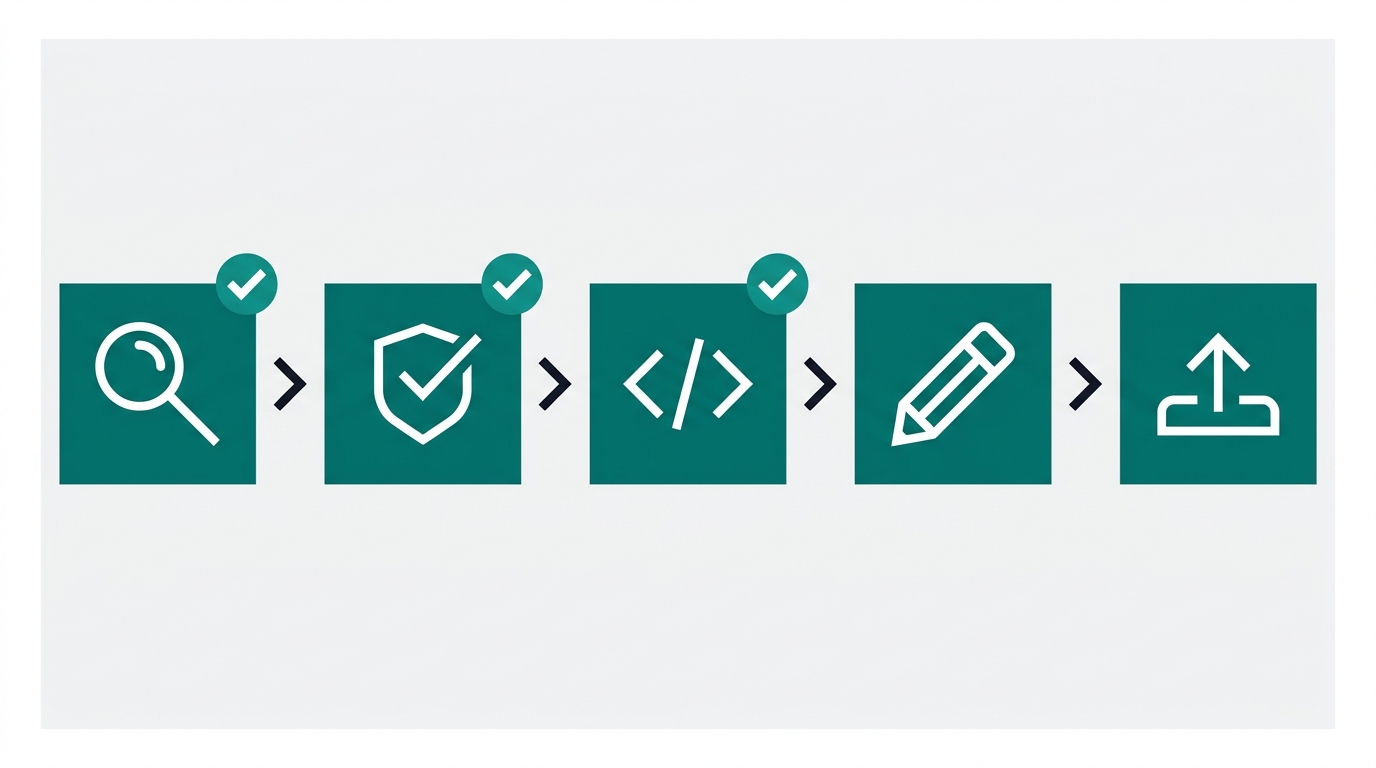
Here's what a versioned pricing page workflow actually looks like in practice.
Step 1: Live competitive research. Survey market positioning before making any change. What are comparable products charging? What units are they using? This gives you a fact-based starting point, not gut feel.
Step 2: Fact validation against primary sources. Every price, limit, and feature claim checked against a live source, with citations attached. Not your memory of what was agreed in a Slack thread. An actual URL or document you can point to six months later.
Step 3: Structured data generation. Produce Schema.org Offer markup with validFrom dates, priceCurrency, and unitCode for usage-based tiers. For subscription pricing, add billingDuration per the January 2025 Schema.org update. This is what tells AI assistants which version to trust.
Step 4: Markdown export with frontmatter. Version metadata in YAML frontmatter: createdAt, replacesVersion, segment, status. This makes programmatic routing possible and gives you an audit trail for free.
Step 5: Publish across the stack. Push to CMS, update CDN edge rules, invalidate caches, update documentation, and ping search indexes from one pipeline. Not five separate manual steps with a week between each.
This is exactly the kind of workflow Ryterr is built for. Live web research as input, fact-checking against primary sources with citations attached, structured data generation, and publish-ready markdown output in one pipeline. The "Written with Ryterr" badge on the output isn't decoration. It's a signal that the facts are sourced and verifiable, which is what both human buyers and AI assistants need.
What to Ship This Week
Start with an audit. Answer these four questions:
- Is your current pricing in visible HTML, or loaded via JavaScript after render?
- Does your pricing page include Schema.org Offer markup with
validFromdates? - If you ask Perplexity "What does [your product] cost?", does it return your current price?
- Can you name the exact date your pricing last changed, and what specifically changed?
If the answer to any of those is "no" or "I'm not sure," you have a versioning problem.
Then document your last three pricing changes: dates, what changed, and why. If you can't reconstruct that from memory and existing records, that's your baseline. You don't have versioning yet, and you should start now.
Build a canonical pricing facts file. One document or database record that holds every price, limit, feature inclusion, and billing term. Reference it programmatically so updates propagate automatically.
Run one limited test. Change something about the presentation, not the price, for one segment. Measure scroll depth and qualified enquiries, not clicks.
FAQ
If I version my pricing page, does that mean I need a separate URL for every version?
No. Versioning is about your internal record of what was live when, not necessarily separate public URLs. One canonical URL is fine. What you need is a documented history: timestamps, diffs, and structured data with validFrom dates so AI systems know which set of facts is current.
Some teams maintain an internal changelog doc. Others use YAML frontmatter in their CMS. Either works as long as it's consistent.
Won't adding Schema.org markup clutter my pricing page for human visitors?
Structured data lives in the page's <head> or in a <script type="application/ld+json"> block that's invisible to readers. It doesn't affect visual layout at all. The only way it shows up for humans is if a tool like Google's Rich Results Test renders it, or if an AI assistant uses it to generate a more accurate snippet. From your reader's perspective, nothing changes.
How do I handle pricing that varies by geography or segment? Which version does the AI cite?
AI assistants typically cite whatever version appears in the HTML they crawl, which is usually the default page without geo-routing applied. Stripe handles this with explicit country-specific pages linked from the main pricing URL. If geographic or segment pricing matters for your business, document each variant with its own structured data and link between them clearly. Perplexity Pages can also serve as citable anchors for specific variants.
What if our pricing changes frequently and we can't keep the structured data current?
Then the structured data is worse than no structured data, because it trains AI systems to trust stale facts. The fix is automation: your pricing facts file updates, and structured data generation runs automatically as part of the same pipeline. If that's too much overhead right now, focus first on making your HTML pricing visible and crawlable, and add structured data once you have a repeatable update process in place.
Our pricing page barely gets traffic. Is this really worth the effort?
The traffic volume on your pricing page matters less than the conversion rate. Pricing pages convert at wildly different rates, and a 12.5% median improvement from testing (per VWO's research) on a high-intent page compounds quickly. More importantly, AI assistants surface pricing in answer to direct product queries regardless of how much direct traffic your pricing page receives. A prospect who never visits your site can still get your price from Perplexity. What that price is, and whether it's accurate, depends on how you've structured and versioned your pricing data.
Sources
- Kompassify SaaS Pricing Page Best Practices
- Hofk Pricing Page Conversion Testing
- Google AI Overviews 100 Countries Announcement
- Google AI Mode in Search Labs
- Vellum AI Hallucination Leaderboard
- Schema.org Releases Documentation
- Aleyda Solis on Structured Data and AI Search
- HubSpot Pricing
- Figma Pricing
- Stripe Pricing
- Forrester State of Data Governance 2023
- VWO Pricing Page Optimization
- Search Engine Land: Danny Sullivan on AI Search Content Strategy
- Perplexity Pages Announcement
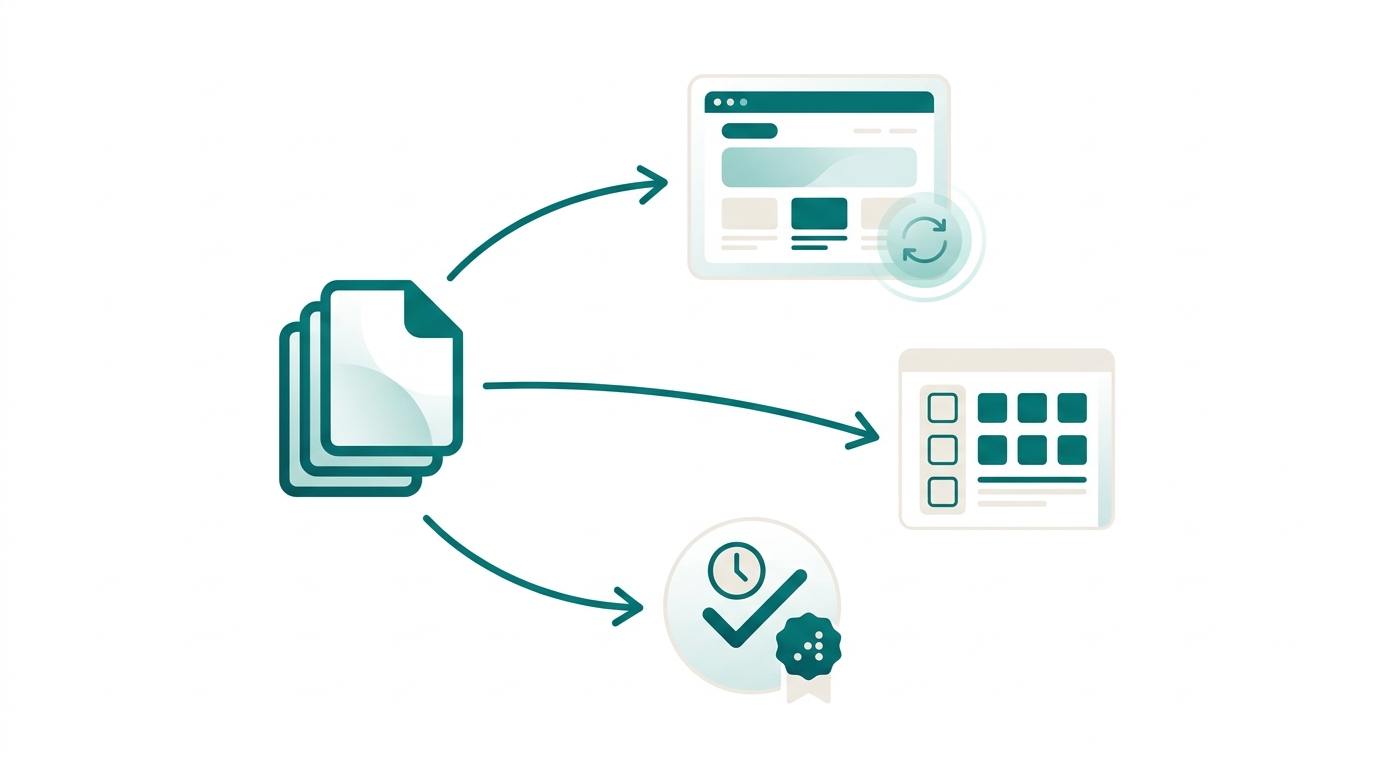
Connect your domain to Ryterr, paste your pricing facts into the brand context, and generate your first versioned pricing page with live citations and Schema.org structured data included. The research runs live, the facts get checked against real URLs, and the output ships with the receipts attached.
Ryterr Team
Written with Ryterr: researched on the live web, written in our voice and fact-checked before publishing.